LinesWatch Agro Desk
….Ambitious Integrated Project Targets 6 Million Eggs Daily, Feed Expansion, Thousands of Jobs
Nigeria’s livestock and food security sectors are poised for a significant transformation as the $1 billion National Integrated Poultry Project enters its pilot phase across three strategic states — Enugu, Kaduna and Oyo — signalling what stakeholders describe as one of the most ambitious private-sector-backed agricultural investments in the country’s recent history.
The initiative, being implemented under the Nigeria–China Strategic Partnership (NCSP), is designed to address structural gaps in Nigeria’s poultry value chain, expand local production capacity and reduce the country’s heavy dependence on imported poultry products.
Announcing the pilot rollout during the Chinese New Year Temple Fair in Abuja, Director-General and Global Liaison of the NCSP, Joseph Tegbe, said the project represents a multi-layered intervention that goes beyond commercial farming to strengthen Nigeria’s food systems and stimulate rural economic growth.
A Mega Investment Targeting Poultry Value Chain Expansion
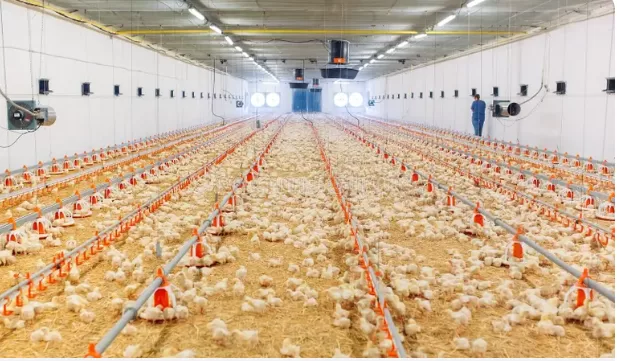
At full capacity, the project is expected to produce approximately six million eggs daily while accommodating more than seven million laying birds and over two million broilers. In addition, the initiative will support the cultivation of over 60,000 hectares of maize and soybeans — critical feed components that currently account for the largest share of production costs in Nigeria’s poultry industry.
Sector analysts say the integrated design addresses one of the poultry industry’s most persistent vulnerabilities: the high cost and inconsistent availability of feedstock.
“This is not just a farming project. It is a strategic intervention to stabilise food supply, create jobs across the value chain and restore dignity to agricultural livelihoods,” Tegbe said.
By linking large-scale poultry production with feed crop cultivation, the project is expected to improve supply chain efficiency while reducing operational costs for producers and retail prices for consumers.
Addressing Nigeria’s Poultry Supply Deficit
Nigeria remains one of Africa’s largest consumers of poultry products but continues to struggle with local supply shortages driven by high production costs, disease outbreaks, limited mechanisation and feed price volatility.
Industry estimates suggest that feed accounts for up to 70 per cent of poultry production costs, making the sector highly vulnerable to fluctuations in maize and soybean prices. Tegbe noted that the project includes subsidised feedstock supply that will support both integrated farms and existing small and medium-scale poultry operators.
Stakeholders believe this component could provide much-needed relief for farmers who have scaled down operations or exited the industry entirely due to rising costs.
If successfully implemented, the project could significantly narrow Nigeria’s poultry supply gap, improve protein availability and strengthen national food security, particularly as inflation continues to pressure household food access.
Strategic State Selection and Economic Impact
The choice of Enugu, Kaduna and Oyo states for the pilot phase reflects efforts to create regional production hubs that leverage existing agricultural strengths, market access and transport infrastructure.
Agricultural economists note that decentralised poultry production can help stabilise regional food supply, reduce logistics costs and stimulate local agribusiness ecosystems.
Beyond food production, the project is projected to generate employment across multiple segments of the value chain, including feed milling, veterinary services, farm management, logistics, processing and distribution networks.
The scale of the project also aligns with Nigeria’s broader agricultural transformation agenda, which prioritises private sector investment, mechanisation and value chain integration as pathways to food security.
Deepening Nigeria–China Agricultural and Industrial Cooperation
The poultry initiative forms part of a broader economic cooperation framework between Nigeria and China, which both countries say is evolving from traditional trade relationships into long-term development partnerships.
Tegbe disclosed that collaboration under the NCSP also extends into heavy industry, particularly ongoing efforts to revitalise the Ajaokuta Steel Complex — a project widely regarded as central to Nigeria’s industrialisation ambitions.
According to him, a fully operational Ajaokuta facility could produce up to 10 million metric tonnes of steel annually, unlocking manufacturing capacity, infrastructure development and large-scale employment opportunities.
“A functional Ajaokuta will power manufacturing, unlock jobs and reposition Nigeria as an industrial force in Africa,” Tegbe said, emphasising the government’s renewed commitment to delivering measurable economic outcomes.
Knowledge Transfer and Human Capital Development
Officials involved in the partnership say knowledge exchange and technology transfer remain central to the cooperation framework. Tegbe highlighted expanding scholarship opportunities, joint research programmes and the development of industrial parks designed to accelerate innovation and agricultural modernisation.
China’s Chargé d’Affaires to Nigeria, Zhou Hongyou, described the poultry project as evidence of the maturity of Nigeria–China bilateral relations, which have now spanned 55 years.
He noted that the collaboration reflects shared priorities of economic growth, food security and technological advancement, adding that the symbolic significance of the Chinese Year of the Horse — representing diligence, resilience and progress — mirrors the trajectory of the partnership.
Similarly, Director of the China Cultural Center in Nigeria, Yang Jianxing, stressed that the growing relationship must continue to deliver tangible benefits for citizens of both countries, particularly in areas that directly improve livelihoods.
Implications for Investors and Agribusiness Stakeholders
The National Integrated Poultry Project is widely seen as a potential catalyst for renewed investor confidence in Nigeria’s livestock sector. Experts note that integrated agricultural models — combining production, feed supply, processing and distribution — have historically delivered stronger returns and improved sustainability in emerging markets.
For agribusiness investors, the project signals increased opportunities in feed production, logistics infrastructure, veterinary services, cold-chain storage and food processing.
For policymakers, the initiative represents a test case for large-scale public-private partnerships aimed at accelerating Nigeria’s food security targets and reducing import dependency.
As the pilot phase unfolds across the three states, stakeholders across Nigeria’s agriculture and investment landscape will be closely monitoring its implementation, scalability and long-term economic impact.