Our Correspondent
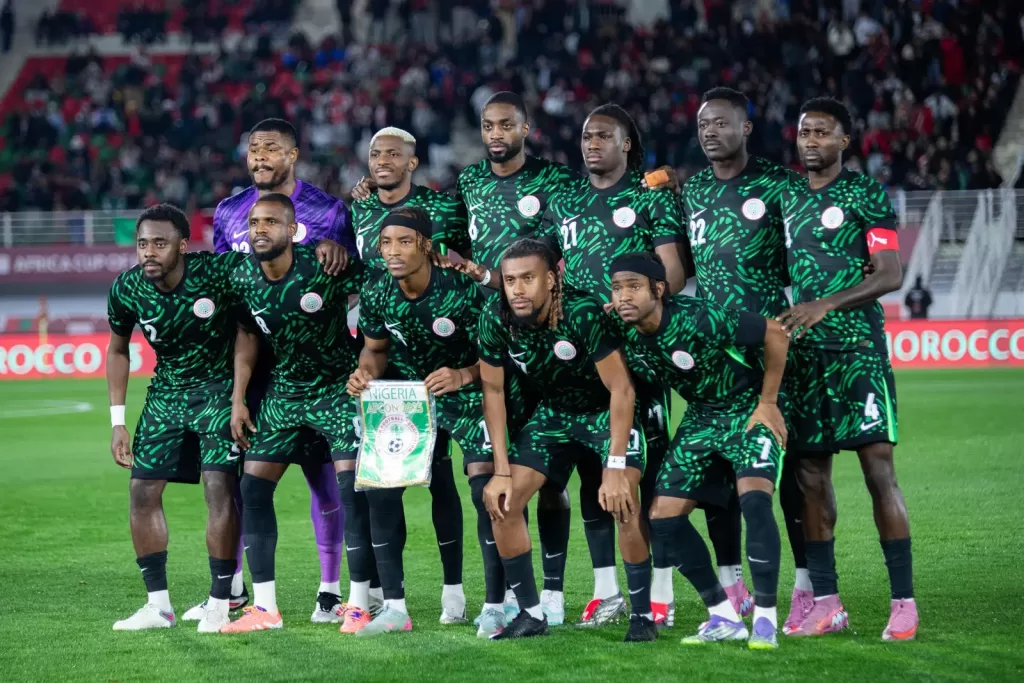
World football governing body, FIFA, has sanctioned the Nigeria Football Federation (NFF) and the DR Congo Football Federation (FECOFA) over disciplinary breaches recorded during their tense 2026 FIFA World Cup African play-off encounter.
The sanctions were disclosed in FIFA’s latest disciplinary overview on the World Cup qualifiers, four months after the controversial play-off final between the Nigeria national football team and the DR Congo national football team.
The match, played in Morocco on November 16, 2025, ended in heartbreak for Nigeria after DR Congo triumphed 4–3 on penalties to progress to the intercontinental play-offs.
According to FIFA, the NFF was found guilty of breaching match security and order regulations following incidents involving the throwing of objects by spectators during the match. The offence falls under Articles 17 and 17.2.b of the FIFA Disciplinary Code.
As a result, the Nigerian federation was fined 1,000 Swiss francs.
DR Congo, however, received a heavier punishment after their supporters were found to have used laser pointers or similar electronic devices during the encounter, an act prohibited under Article 17.2.d of the FIFA Disciplinary Code.
FIFA consequently imposed a 5,000 Swiss franc fine on the Congolese federation.
The disciplinary action comes amid lingering controversy surrounding the play-off, with Nigeria still awaiting FIFA’s decision on a formal protest filed by the NFF against DR Congo.
Following the defeat, Super Eagles head coach Eric Chelle alleged that Congolese officials resorted to spiritual manipulation, including voodoo practices, during the match — a claim that further fuelled tensions around the fixture.
Nigeria’s eligibility protest
Beyond the disciplinary sanctions, the dispute between the two football bodies has deepened over allegations that DR Congo fielded ineligible players during the play-off.
The NFF submitted a petition to FIFA on December 15, 2025, requesting an investigation into what it described as irregular nationality switches involving several overseas-born players who featured for DR Congo.
Nigeria argued that some of the players received approval to represent DR Congo only days before the decisive match, despite having been previously called up for the fixture.
Among those listed in the complaint were Lionel Mpasi, Aaron Wan-Bissaka, Axel Tuanzebe, Arthur Masuaku, Samuel Moutoussamy, Ngal’ayel Mukau, Noah Sadiki, Nathanaël Mbuku and Cédric Bakambu, who started the match.
Others named include substitutes Timothy Fayulu, Matthieu Epolo, Joris Kayembe, Edo Kayembe, Steve Kapuadi, Gédéon Kalulu, Michel-Ange Balikwisha and Mario Stroeykens.
The complaint, made public by journalist Osasu Obayiuwana, urged FIFA to review the eligibility process and potentially disqualify DR Congo from the qualification campaign if violations were established.
Play-off preparations continue
Despite the controversy, DR Congo are continuing preparations for the next stage of the qualification process.
The team is scheduled to face the winner of the semi-final between the New Caledonia national football team and the Jamaica national football team on March 31 for a place at the 2026 FIFA World Cup.
However, in a development that has fuelled further speculation, DR Congo have dropped two of the players listed in Nigeria’s complaint — Michel-Ange Balikwisha and Mario Stroeykens — from their latest 26-man squad.FIFA is yet to announce its final verdict on the eligibility protest, a decision that could have significant implications for the World Cup qualification.