Our Correspondent
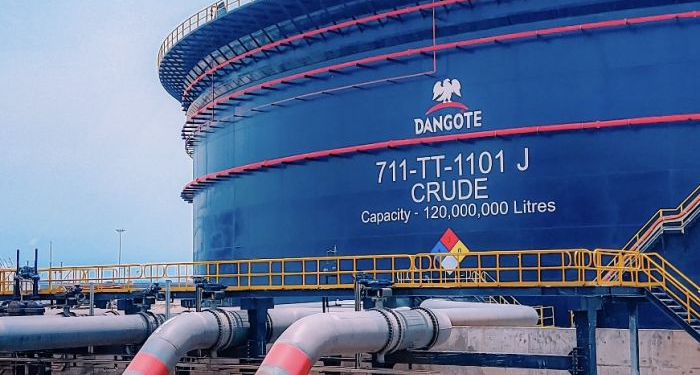
LAGOS/NEW DELHI — In a twist that underscores the complexities of global oil markets, Indian refiners are increasing purchases of Nigerian crude while Nigeria’s $20 billion Dangote Petroleum Refinery — Africa’s largest — is relying more heavily on American oil to sustain operations.
Industry data and trading sources reveal that Indian state refiners have recently secured over two million barrels of Nigerian crude for September and October delivery, even as Dangote’s Lagos-based facility imports record volumes from the United States.
India Returns to West African Grades
The Indian Oil Corporation (IOC) recently purchased one million barrels of Nigeria’s Agbami crude for September delivery via a tender awarded to global trader Trafigura. Bharat Petroleum Corporation Ltd (BPCL) also bought Nigerian barrels for September arrival through direct negotiations.
These purchases mark a partial return to West African grades for Indian refiners, who had largely turned to discounted Russian crude since 2022. That trend shifted in late July after pressure from Washington prompted New Delhi to curb Russian imports, particularly following US President Donald Trump’s renewed push to isolate Moscow economically.
In addition to Nigerian grades, Indian refiners have booked cargoes of Angola’s Girassol, US Mars, and Abu Dhabi’s Murban crude.
Dangote Turns to the US
In stark contrast, the Dangote refinery — which has publicly pledged to prioritise domestic supply — has been sourcing the bulk of its feedstock from the US. Data from commodities analytics firm Kpler shows that in July, US grades accounted for roughly 60% of the refinery’s record 590,000 barrels per day (bpd) intake, with Nigerian grades making up the remaining 40%.
The US share — primarily West Texas Intermediate (WTI) — overtook Nigerian supply for the first time since operations began, driven by competitive pricing and operational constraints at home.
“WTI has been more competitively priced than certain Nigerian options, particularly as US barrels struggled to find traction in Asia,” Kpler noted, citing rising OPEC+ output and softer Middle Eastern crude premiums earlier in the year.
The refinery has faced persistent challenges securing domestic crude in line with Nigeria’s Domestic Crude Supply Obligations. Some Nigerian grades that once fed Dangote, such as CJ crude, have been exported instead to Canada and re-shipped to the US.
Storage, Capacity, and Operational Hurdles
Dangote’s crude inventories rose to 6.73 million barrels in July — a 2.5 million barrel increase month-on-month — suggesting part of the US imports have been stockpiled. The refinery is currently operating at about 85% of its 650,000 bpd nameplate capacity, with plans to expand to 700,000 bpd.
However, analysts remain cautious. Kpler projects the plant will not approach sustained full utilisation before late 2026, citing potential mechanical issues and ongoing maintenance.
Operational adjustments continue, with the refinery importing about 22,000 tonnes per month of condensate naphtha to boost gasoline yields. This follows technical problems at its Residual Fluid Catalytic Cracker (RFCC) unit since January.
Bigger Picture: Nigeria’s Oil Landscape
While Dangote navigates sourcing challenges, Nigeria’s upstream sector is undergoing a shift. Indigenous producers are gaining ground as international majors exit onshore operations. July’s crude and condensate output averaged 1.75 million bpd — the highest three-month average in over five years — supported by reduced pipeline outages and rising onshore production.
Infrastructure developments are also accelerating. Green Energy’s Otakikpo terminal became Nigeria’s first privately built onshore export terminal in over 50 years, and Conoil has completed its first Obodo crude shipment. Renaissance Africa Energy is also ramping up production after acquiring Shell’s onshore assets.
The Irony of Global Trade
That Nigeria’s flagship refinery is importing a majority of its crude from halfway across the world while its own oil feeds foreign refineries like those in India is a striking reflection of the global oil trade’s fluid realities. Pricing, geopolitics, and logistics often outweigh geographical proximity or national resource ambitions.
For Dangote, flexibility may be a commercial necessity. For Nigeria, the development is a reminder that achieving true energy self-sufficiency will depend as much on domestic supply policy and infrastructure reliability as on refining capacity itself.